history
The History of Smeg Retro Design: Enamel Works to 50's Style
By Home Espresso Bar Editorial Team · November 1, 2026

Smeg’s “50’s Style” line is instantly recognizable for its rounded chrome-finished fronts, pastel-hued panels and iconic logo that looks as much at home on a kitchen wall as on a mid-century sofa. By the end of this article you’ll understand how a company that began as an enamelling workshop in post-war Italy built a design language around the FAB refrigerator, how architect collaborations and fashion partnerships reinforced that aesthetic, and why today’s Smeg coffee machines echo the same retro cues that first appeared on a 1997 fridge. You’ll also learn what “Smeg” actually stands for, when the 50’s Style range launched, who shapes its small-appliance designs, and how the brand’s acquisition of La Pavoni fits into the larger story.
Key takeaways
- Name origin: Smeg is an acronym for Smalterie Metallurgiche Emiliane Guastalla, reflecting its roots in enamel and metalworking1.
- Retro turning point: The FAB refrigerator range, introduced in 1997, defined the visual language that became the 50’s Style family1.
- Design partners: Small appliances in the 50’s Style line were created in 2014 by Matteo Bazzicalupo and Raffaella Mangiarotti of deepdesign3.
- Coffee machine continuity: The retro-styled portafilter espresso machine and other coffee devices adopt the same domed fronts, chrome accents and spherical knobs that characterize the FAB28 fridge4.
- Strategic expansion: The 2019 acquisition of La Pavoni led to a 2020 capsule-machine collaboration with deepdesign, extending the retro aesthetic into the espresso market1.
Origins: Enamelling and the Birth of Smeg
The story begins in 1948 when Vittorio Bertazzoni Sr founded a modest workshop in Guastalla, near Reggio Emilia, Italy1. The company’s name, Smalterie Metallurgiche Emiliane Guastalla, directly references its original focus on enamel coating and metalworking, a heritage that would later inform the glossy, rounded surfaces of its appliances. This early expertise in enamelling gave Smeg a technical advantage in producing durable, high-gloss finishes, a trait that later became a signature element of its retro designs.


Early Product Milestones
Smeg’s first major foray into household appliances came with cooker production in 1955, followed by the launch of its inaugural Smeg-brand cooker, the Elisabeth, in 19561. The brand expanded into laundry appliances with the Leda washing machine in 1963 and entered the built-in kitchen segment with ovens and hobs in 19711. Visual identity was also refined when graphic designer Franco Maria Ricci created the now-familiar Smeg logo in 1977, drawing inspiration from gas-hob burners and oven control knobs1. These milestones established Smeg as a diversified manufacturer with a growing emphasis on design.
Architectural Collaborations and Design Evolution
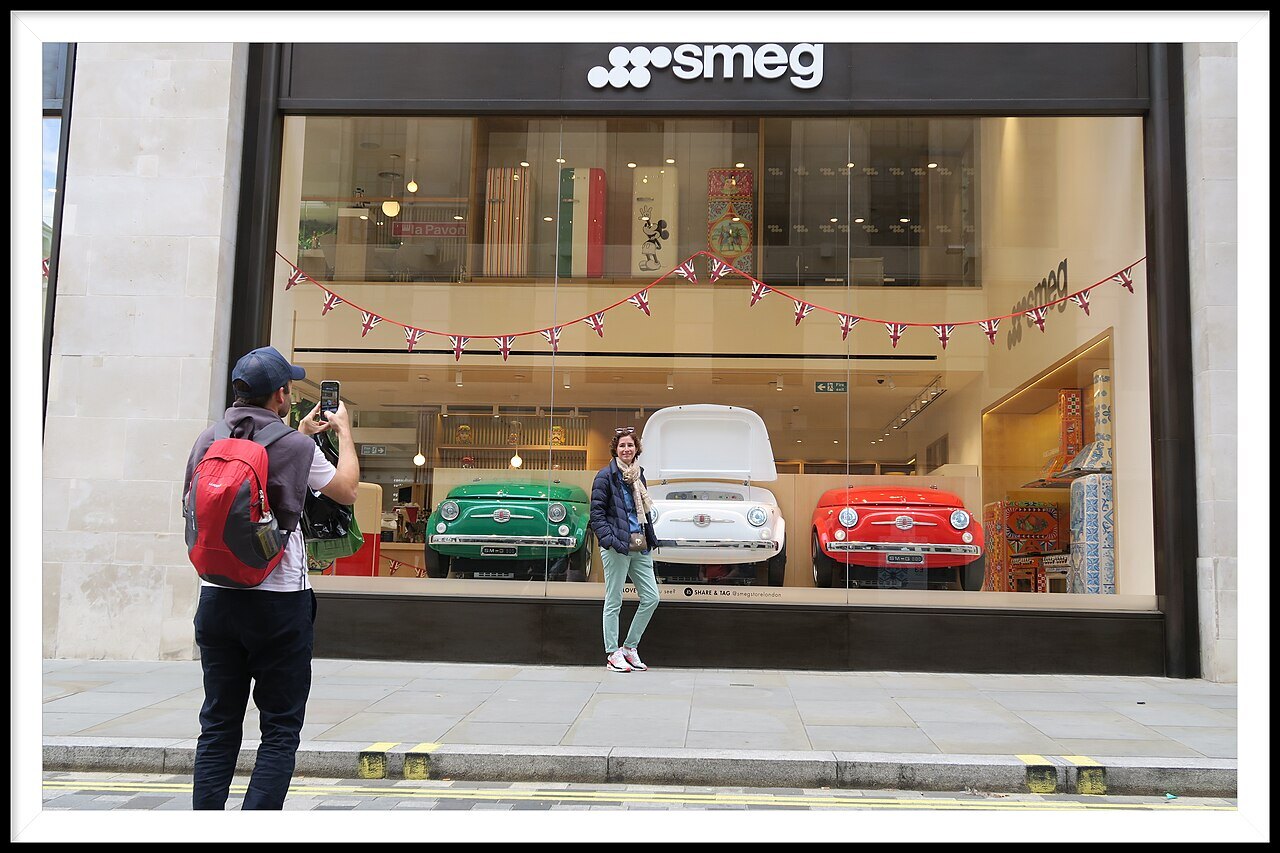
From the mid-1980s onward, Smeg began partnering with celebrated architects to infuse its appliances with high-design credibility. Guido Canali joined the collaboration roster in 1985, Mario Bellini in 1991, and Renzo Piano in 19951. These partnerships signaled a shift from purely functional engineering to objects that could be displayed as design statements. The momentum continued with a 60th-anniversary range designed by Marc Newson in 2008, a denim-finished FAB28 created with Italia Independent in 2012, and the SMEG500 refrigerator inspired by the Fiat 500 in 20131. Each collaboration reinforced the brand’s reputation for marrying Italian craftsmanship with contemporary aesthetics.


The FAB Refrigerator and the Birth of 50’s Style
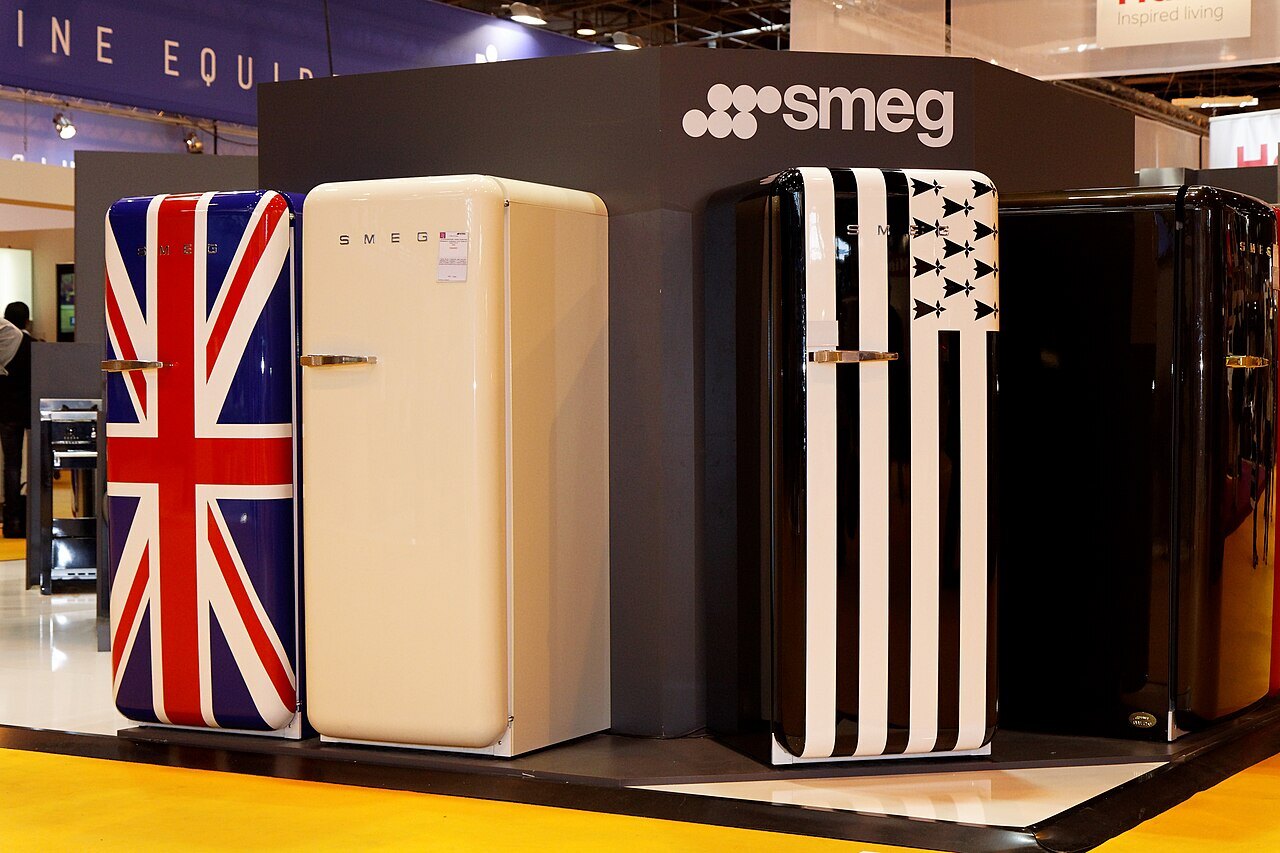
The pivotal moment for Smeg’s retro identity arrived in 1997 with the launch of the FAB refrigerator range1. The FAB28 model, in particular, is described by Smeg as the “founder” of the 50’s Style family, featuring soft curves, rounded forms, mirrored trims, chrome detailing, spherical levers and a prominent logo3. The German-language page adds that the line’s domed fronts, broad color palette and chrome accents extend to small appliances as well4. By echoing the sleek, optimistic look of 1950s American appliances, an aesthetic lineage traced back to Raymond Loewy’s 1934 Coldspot refrigerator, as noted by Monapart magazine, Smeg created a cohesive visual language that could be applied across product categories6.
Small Appliances: Deepdesign and the 50’s Style Line
In 2014 Smeg expanded the retro vocabulary to its small-appliance portfolio, commissioning deepdesign’s Matteo Bazzicalupo and Raffaella Mangiarotti to translate the FAB28’s cues into toasters, kettles and other countertop items3. The resulting pieces retain the domed fronts, pastel hues and chrome-finished knobs that define the larger fridge series, creating a unified “domestic landscape” where even a kettle feels like a design object. This deliberate consistency ensures that the 50’s Style aesthetic is not limited to large appliances but permeates the entire kitchen environment.
Coffee Machines: Echoing the FAB Aesthetic
The retro theme extends to Smeg’s coffee equipment. Within the 50’s Style range, the German page highlights a retro-styled portafilter espresso machine designed for both ground coffee and pods, featuring the same domed façade, chrome details and spherical controls that characterize the FAB28 fridge4. The Indian market version lists a coffee set that includes both espresso and drip coffee machines, reinforcing the global rollout of the retro design language4. Additionally, the Dolce & Gabbana collaboration introduced a coffee machine as part of the “Sicily is my Love” small-appliance collection, further cementing the link between the brand’s iconic fridges and its coffee offerings5.
Collaborations with Fashion and Art
Smeg’s willingness to partner with fashion houses amplifies the cultural cachet of its retro line. In 2016 the brand released the Dolce & Gabbana Frigorifero d’arte collection. The collection includes a special FAB28 edition of 100 hand-painted refrigerators, each adorned by Sicilian artists with unique imagery5. The same partnership produced the “Sicily is my Love” collection showcased at Salone del Mobile in 2017, which included a coffee machine, and the “Divina Cucina” line in 20185. These collaborations demonstrate how the FAB-derived design language can be a canvas for artistic expression while remaining instantly recognizable.
Acquisition of La Pavoni and Expansion into Espresso
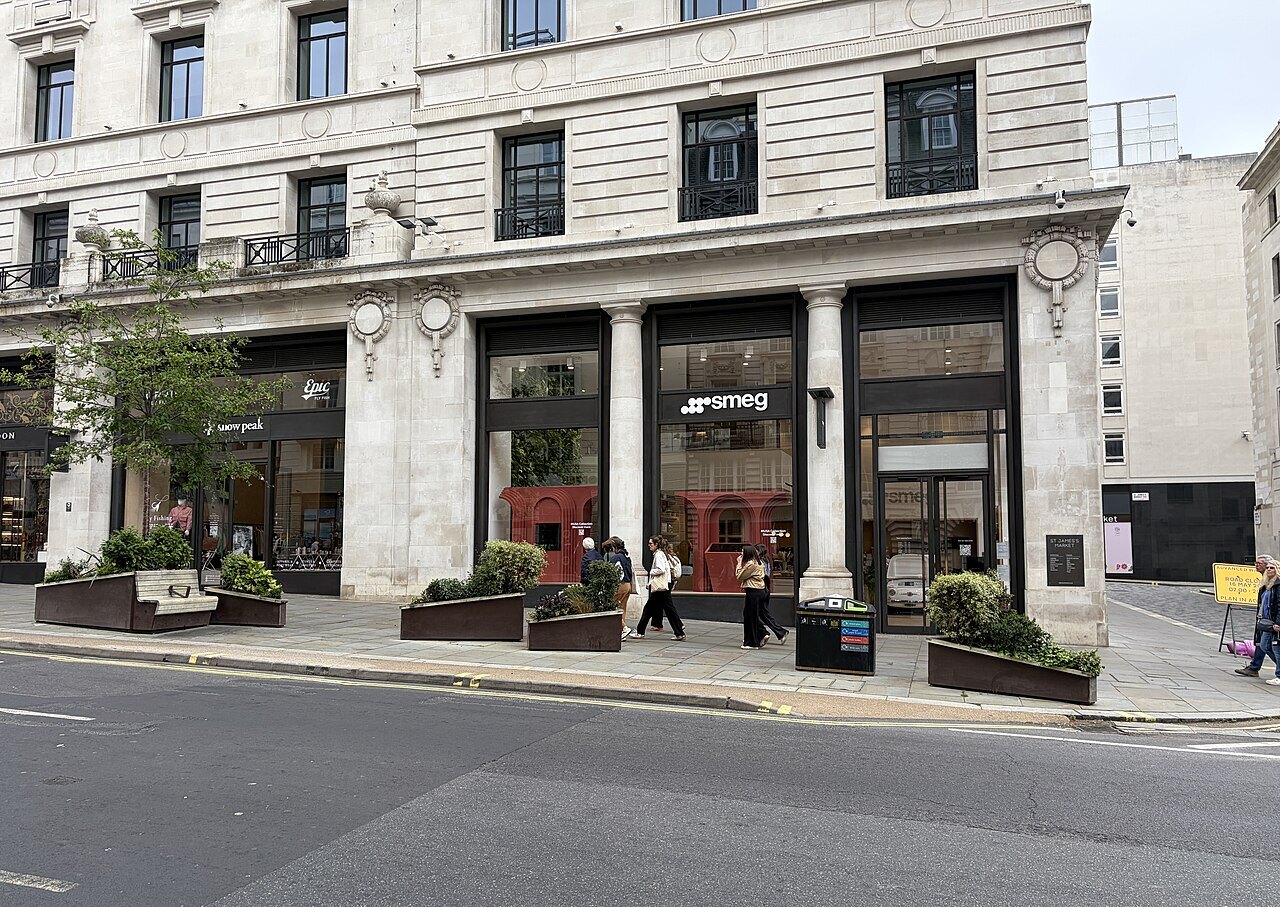
In 2019 Smeg announced the acquisition of La Pavoni, an espresso-machine maker, signaling a strategic move to deepen its presence in the coffee-equipment market1. The following year, Smeg released the Lavazza A Modo Mio SMEG capsule machine, designed in partnership with deepdesign, marrying the retro 50’s Style visual cues with modern capsule technology1. This acquisition not only broadened Smeg’s product portfolio but also allowed the brand to apply its signature aesthetic to a wider range of espresso solutions, reinforcing the visual continuity across both large appliances and specialty coffee gear.
Answering Common Questions
What does Smeg stand for?
Smeg is an acronym for Smalterie Metallurgiche Emiliane Guastalla, reflecting the company’s origins in enamel coating and metalworking1.
When did the 50’s Style line begin?
The retro aesthetic was first codified with the FAB refrigerator range in 1997, and the small-appliance extension of the 50’s Style line launched in 201413.
Who designs Smeg’s small appliances?
Matteo Bazzicalupo and Raffaella Mangiarotti of the design studio deepdesign are credited with the 2014 small-appliance collection that carries the 50’s Style language3.
How did the FAB fridge shape the brand’s look?
The FAB28 model introduced soft, rounded forms, mirrored trims, chrome details, spherical levers and a prominent logo, elements that became the visual DNA for the entire 50’s Style family, influencing everything from refrigerators to coffee machines34.
Why do Smeg coffee machines look like the fridges?
Both the retro-styled portafilter espresso machine and the broader coffee-machine offerings adopt the same domed fronts, chrome accents and pastel color schemes that originated with the FAB28 fridge, creating a unified design language across product categories4.
How did Smeg end up with La Pavoni?
Smeg announced the acquisition of the espresso-machine maker La Pavoni in 2019, a move that enabled the brand to expand its coffee-equipment portfolio and launch new capsule-machine collaborations that retain the 50’s Style aesthetic1.
Closing Thoughts
From its 1948 foundation as an enamelling workshop to the globally recognized 50’s Style line, Smeg’s journey is a study in how material expertise, strategic collaborations and a single, well-defined visual language can transform a kitchen appliance brand into a design icon. The FAB refrigerator acted as a catalyst, translating mid-century optimism into a contemporary product family that now includes everything from large fridges to espresso machines. By consistently applying rounded chrome-finished forms, pastel palettes and iconic knobs, Smeg has created a timeless aesthetic that feels both nostalgic and fresh, a testament to the power of design continuity across decades.


