history
The History of the Chemex: A Chemist's 1941 Coffeemaker Design
By Home Espresso Bar Editorial Team · November 1, 2026

The Chemex is more than a coffee maker; it is a piece of mid-century design that still shapes how we think about brewing. By the end of this article you will know exactly who invented the Chemex and when, why its hourglass silhouette, wooden collar and leather tie were chosen, how the patent’s air-groove and wide neck solve a brewing problem, and what institutions have celebrated its design. The story weaves together Schlumbohm’s chemistry background, Bauhaus-era modernism, wartime production constraints, and the coffee world’s lasting affection for a single-piece glass brewer.
Key takeaways
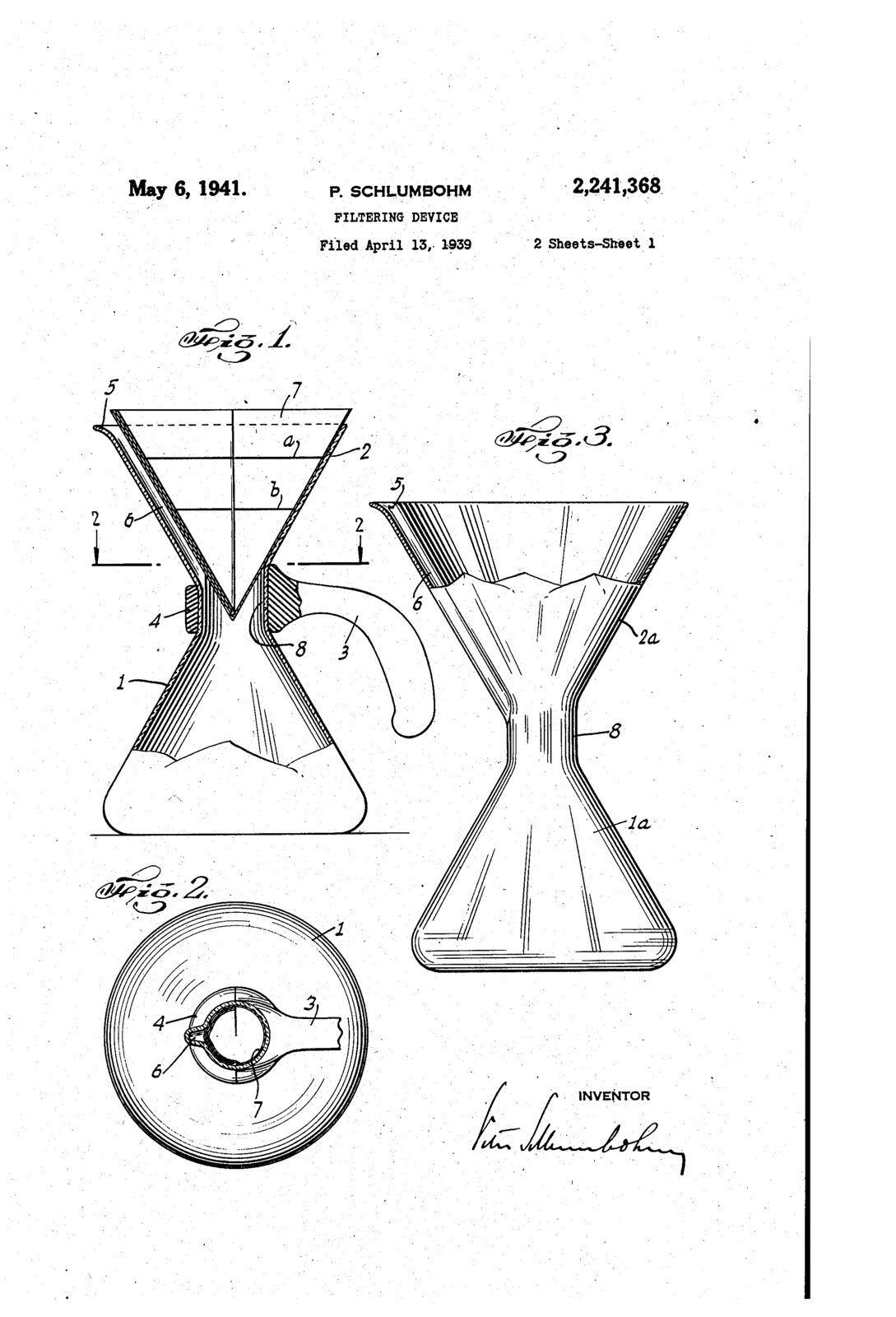
- Peter Schlumbohm, a German-born chemist, filed US patent 2,241,368 for a “filtering device” on 13 April 1939 and received the grant on 6 May 19411.
- The patent’s deep groove in the funnel wall provides an air path that prevents a vacuum seal, while the wide neck allows a cleaning brush to reach the interior and lets the user lift the paper filter by its rim1.
- Schlumbohm adapted the laboratory Erlenmeyer flask into a heat-resistant borosilicate hourglass vessel, a choice inspired by Bauhaus-style modernism and the non-porous glass he knew from chemistry work2.
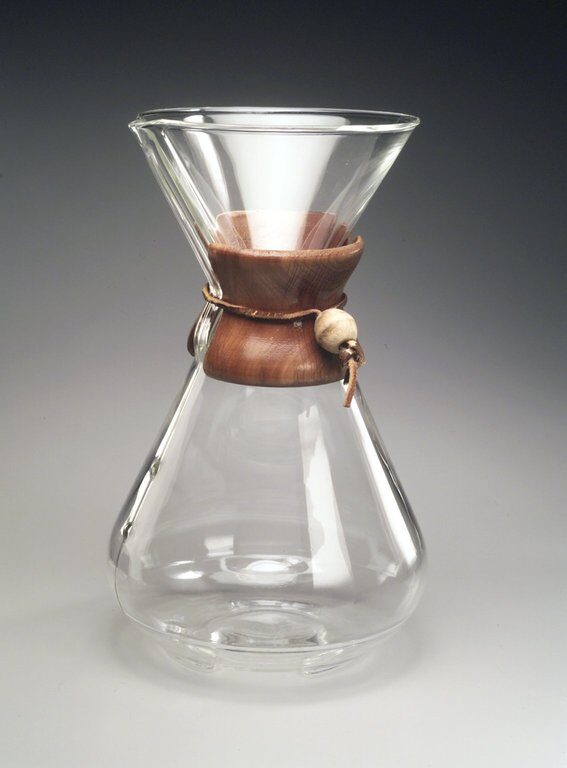
- The iconic wooden collar and leather (or rawhide) tie serve as a heat-proof grip and a decorative yet functional closure, echoing the practical aesthetics of the era36.
- The Chemex appeared on a 1942 Museum of Modern Art bulletin cover, and Sprudge, Metropolis and Wikipedia note that MoMA holds a Chemex in its collection, while the Illinois Institute of Technology named the Chemex among the best-designed modern products, with Lemelson-MIT giving 1956 and Wikipedia giving 195826.
Inventor and Patent Origins
Peter Schlumbohm was born in Kiel, Germany, on 10 July 1896, served in World War I, and earned a chemistry PhD at the University of Berlin2. He first came to the United States in 1931 to sell patent rights, including vacuum-bottle designs for the American Thermos Bottle Company, and settled in New York City in 19362. In 1939 Schlumbohm co-founded the Chemex Corporation with the tagline “The Chemists’ Way of Making Coffee,” and filed US patent 2,241,368 for a “filtering device” on 13 April 1939, assigning half the interest to Isaac Hatter of Akron, Ohio1. The patent was granted on 6 May 19411.


Design Influences - Bauhaus and Laboratory Glass
Schlumbohm’s chemistry background gave him intimate knowledge of laboratory glassware. He transformed the Erlenmeyer flask, a staple of chemistry labs, into a heat-resistant borosilicate brewer with an hourglass silhouette, a shape that “drew on Bauhaus design” and the non-porous qualities of lab glass2. The Chemex’s own description echoes this lineage, noting that the carafe is a single piece of borosilicate glass whose hourglass form reflects Bauhaus-style simplicity and the durability of laboratory vessels3. Metropolis magazine further describes the 1941 design as a “mouth-blown Pyrex beaker”, a nod to the same high-temperature glass that survived scientific experiments4.
Functional Features Explained by the Patent
The patent text reveals the engineering logic behind the Chemex’s signature elements. The device consists of a conical paper-filter funnel and a matching conical flask whose narrow ends face each other; they may be formed as a single piece or as two joined parts1. A deep groove cut into the funnel wall serves a dual purpose: it lets displaced air escape as coffee drains, preventing a vacuum that would halt flow, and it doubles as a pouring spout1. The patent stresses that without such an air path, “joining a funnel to a flask would not work.”
The opening between funnel and flask is deliberately kept large so a cleaning brush can reach inside, facilitating maintenance after each brew1. The paper filter’s rim is designed to be gripped and lifted out, allowing the spent grounds to be removed cleanly1. For handling, the patent describes a cylindrical section between funnel and flask that can be fitted with a grip-type handle; an alternative embodiment offers a more conventional handle1. These details illustrate how the Chemex’s form follows function, a principle championed by Bauhaus designers.


Signature Materials - Wood Collar, Leather Tie, and Borosilicate Glass
Wikipedia says the wooden collar is a heat-proof grip that is turned, split in two and held together by a tied leather thong6. Metropolis adds that the leather strap is tied to a wooden bead, reinforcing the tactile, hand-crafted feel of the brewer4. Sprudge notes that the design combined Bauhaus-style simplicity with the practical limits of wartime rationing5.
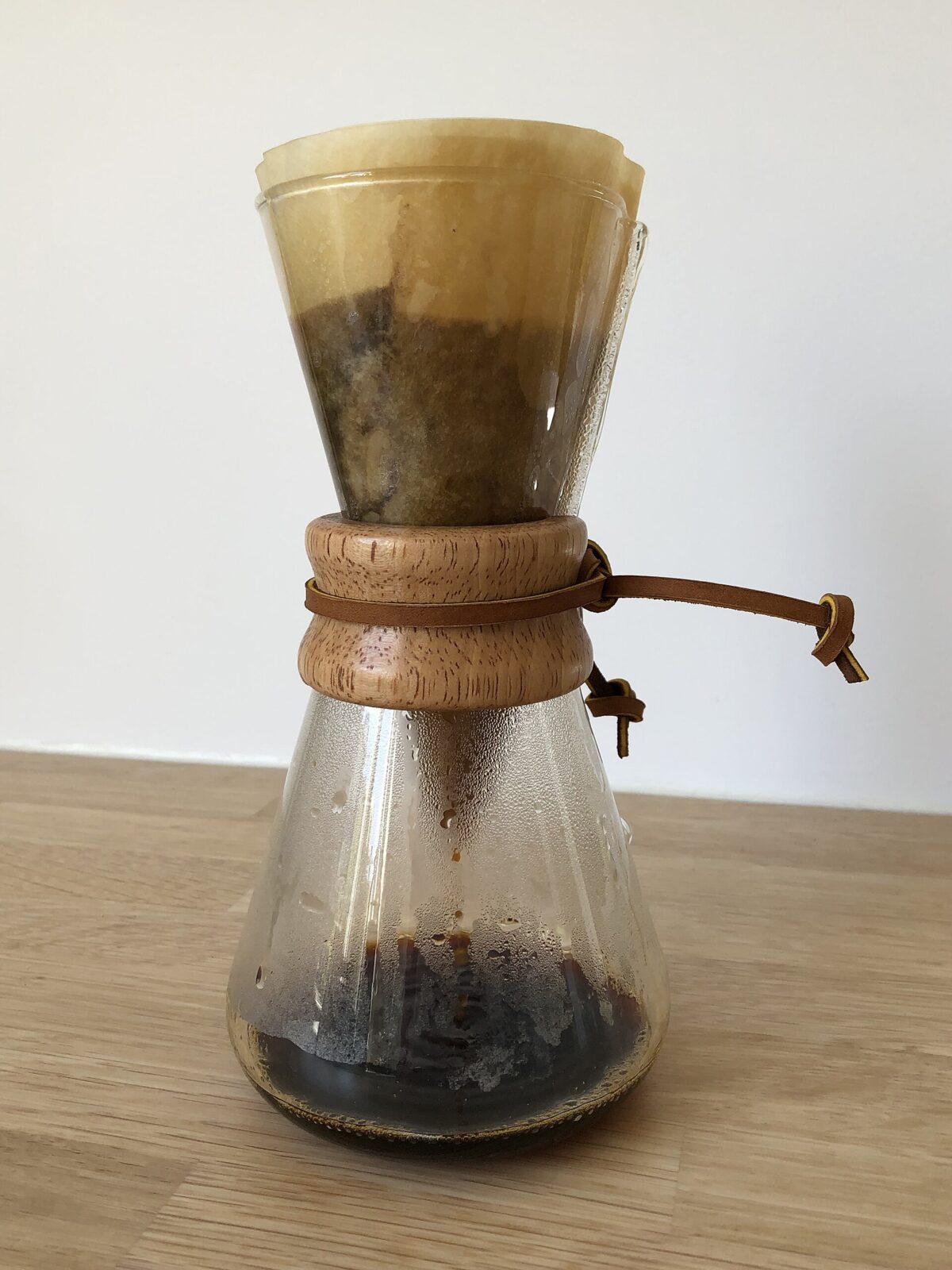
The bonded Chemex paper filter, developed by Schlumbohm himself, is thicker than ordinary drip filters3.
The Chemex in Cultural Institutions
Lemelson-MIT records that a 1942 Museum of Modern Art bulletin featured the Chemex on its cover, and Sprudge, Metropolis and Wikipedia note that MoMA holds a Chemex in its collection2. The Illinois Institute of Technology named the Chemex among the best-designed modern products, with Lemelson-MIT giving the year as 1956 and Wikipedia giving 19583.
Answers to Common Questions
Who invented the Chemex and when?
Peter Schlumbohm, a German-born chemist, filed the foundational US patent 2,241,368 on 13 April 1939 and received the grant on 6 May 1941. He co-founded the Chemex Corporation in 19391.
Why does the Chemex have a wooden collar and leather tie?
The wooden collar provides a heat-proof grip; the leather (or rawhide) tie holds the split collar together, creating a functional yet tactile handle. This design reflects Bauhaus simplicity and the practical needs of wartime production36.
Why is the Chemex hourglass-shaped?
Schlumbohm adapted the laboratory Erlenmeyer flask into a borosilicate hourglass vessel, a shape inspired by Bauhaus modernism and the non-porous glassware he knew from chemistry work2.
Why are Chemex filters thicker than other filters?
Schlumbohm created a bonded paper filter that is thicker than ordinary drip filters3.
Is the Chemex really in MoMA?
Yes. The Chemex appeared on a 1942 MoMA bulletin cover and is held in the museum’s collection, as documented by Lemelson-MIT, Sprudge, Metropolis and Wikipedia2.
How did Bauhaus design shape the Chemex?
Bauhaus principles of functional simplicity, honest materials, and geometric proportion guided Schlumbohm’s hourglass silhouette, the unadorned glass body, and the minimalist wood-and-leather handle. Sprudge notes that the design “combined Bauhaus-style simplicity with the practical limits of wartime rationing”5.
Legacy and Continuing Influence
More than eight decades after its patent was granted, the Chemex remains a touchstone of design history. Its clean lines, single-piece glass construction, and thoughtful engineering continue to inspire coffee innovators; Alan Adler, the AeroPress inventor, credits a Chemex instruction sheet with introducing him to the idea that lower brewing temperatures can improve flavor7. Schlumbohm’s broader inventive career spanned over 300 patents across diverse fields, yet the Chemex stands out as his most successful commercial achievement3. The enduring appeal lies in a harmonious marriage of chemistry, modernist aesthetics, and practical problem-solving, a true embodiment of “the chemist’s way of making coffee.”


